As renewable energy surges, engineering professionals face a tough choice: should we chase the sun or harness the wind? Though each path comes with its own challenges, the question lies in shaping the power that will fuel our future.
Renewable energy is growing fast, and the growth of solar and wind power has grown rapidly over the past decade. Electrical engineering professionals play a key role in making sure these systems work well with grids. They help us decide how to use it. Solar panels and wind turbines both provide clean power, but each has its own benefits and challenges. In this article, we look at how engineering professionals work with these systems, looking at their characteristics, applications, and innovations, without saying that one is better than the other.
Renewable Energy Today
Solar and wind are transforming how power grids operate. Engineering professionals are drawn to these technologies because they offer opportunities to innovate through the design of smart grids that balance variable energy to the integration of advanced storage solutions that improves system efficiency. These challenges are shaping tomorrow’s grid that creates more reliable electricity networks.
Here are the key ways solar and wind are driving this transformation:
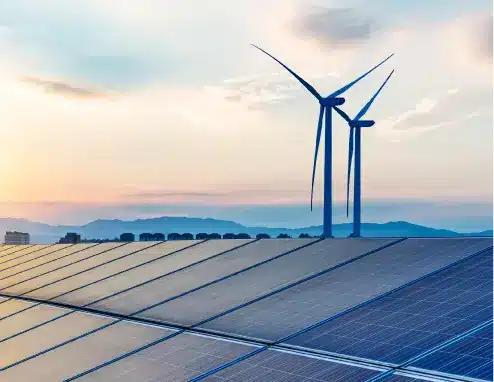
- Decentralised Power Generation: Solar panels on rooftops and small wind turbines allow energy to be produced close to where it’s used, and this reduces transmission losses.
- Smart Management: Advanced control systems and smart grids help balance the nature of solar and wind and ensure a steady and reliable power supply.
- Energy Storage Integration: Batteries and other storage technologies store excess energy during peak production and release it during low production periods, and this smoothens supply and demand.
- Complementary Generation: Solar and wind keep the power supply steady because sunny days make solar strong and windy nights make wind strong.
- Reduced Carbon Footprint: Solar and wind power reduce greenhouse gas emissions by displacing fossil fuels.
- Scalable Solutions: Both solar and wind technologies can be deployed from small-scale local projects to massive utility-scale farms, and this offers flexibility for different regions and communities.
Sun Vs. Breeze
Solar and wind both power our grids in very different ways, and by understanding how each works, engineering professionals can mix them together to keep the lights on reliably. These complementary patterns allow experts to design grids without disruption. Here’s a closer look:
Best Time to Generate Power
Solar: Works best on bright, sunny days.
Wind: Often stronger at night or when the wind picks up in many regions.
Predictability
Solar: More predictable than wind at day-ahead horizons, but cloud transients cause steep ramps due to sub-hour forecasting challenges.
Wind: Less predictable through changing weather and seasons.
Where They Can Be Installed
Solar: Fits on rooftops, in open fields, or even floating on water.
Wind: Works best in open spaces, hills, or offshore at sea that will require careful and thorough site planning.
Space Needed
Solar: Can work for small rooftops or huge farms.
Wind: Needs plenty of room between turbines to operate well.
Maintenance
Solar: Low-maintenance and can be easily cleaned through occasional checks that require vegetation control.
Wind: Requires more regular cleaning through lubrication and condition monitoring because turbines have big, moving parts that can be more complex.
Grid Integration Challenges
Solar panels and wind turbines are changing the way we get our electricity, but putting all that energy onto the grid isn’t always simple. Engineering professionals must get creative to keep the lights on and the system stable. Some of the main challenges they tackle include:

- Keeping the Grid Stable: Experts would need to carefully monitor the system and adjust other power sources to make sure lights stay on, devices keep running, and homes and businesses don’t lose power.
- Storing Extra Energy: Experts must figure out when and how to store and release energy is one of the main challenges in making renewables reliable, because without storage, extra energy from solar and wind would go to waste.
- Predicting Power Production: Experts have to forecast both the weather and the resulting electricity output to make sure there’s enough power for everyone, and getting these predictions wrong can lead to shortages or wasted energy.
- Upgrading the Grid: Experts would need to plan upgrades and install new smart controls that are equipped to handle fluctuations, which can be costly and complex.
- Coordinating Multiple Sources: Experts would have to carefully balance multiple sources, so the grid stays stable, and there are no blackouts or overloads.
Two Forces, One Grid
Solar and wind source will continue to grow in scale, and engineers and technical professionals know that the answer isn’t to pick whichever power source is best. The solution lies in innovation. It is finding ways on how to merge these two renewable sources, so they work together to meet the world’s present and future needs.
- Hybrid Systems: Solar panels and wind turbines are paired with batteries and storage solutions. Extra energy produced during sunny and windy periods is saved and released when needed, and this would keep electricity flowing consistently.
- Smart Grids: Sensors through AI constantly monitor energy use. This balances supply and demand in real time, so the grid stays smooth.
- Predictive Maintenance: Experts can detect and fix issues before they cause downtime by monitoring equipment in real time, and this would keep them efficient and dependable.
- Innovative Installations: Floating solar panels, offshore wind farms, and microgrids for remote communities expand the reach of clean energy, making it available to more people and places.
Looking ahead, solar and wind will continue to grow in scale and sophistication. Engineering professionals are exploring larger wind projects, higher-efficiency solar panels, and next-generation storage technologies. The focus is not on choosing one technology over the other, but it is in designing smarter systems that merge solar and wind energy sources to meet the world’s future energy needs. As this accelerates, programmes at the Engineering College of Technology help equip future engineers with the knowledge and skills to contribute to the evolving power systems sector.
Onto the Next Frontier

Every grid and community brings different demands, and renewable energy systems must be designed with care and flexibility. As energy systems grow more interconnected, engineering professionals must design solutions that can balance real-world constraints – an approach reflected in ECT’s focus on industry-relevant engineering education.