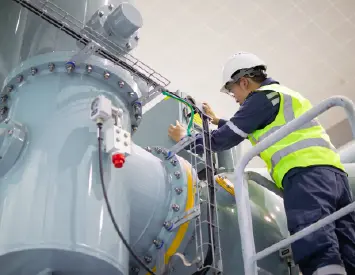
What looks like a simple automated process can involve a complex network of sensors, controllers, and machines working in real time. Making these systems work together reliably is where industrial automation becomes an engineering challenge.
This article explores the systems and technologies that make industrial automation possible, while highlighting the practical challenges engineering professionals must consider when designing reliable and responsive operations. As automation becomes more sophisticated, understanding the engineering behind it could be the key to knowing where industry goes next.
A Need for Industrial Automation
Industrial automation is becoming an increasingly important part of industrial transformation worldwide.

According to the World Economic Forum’s Future of Jobs Report 2025, 58% of employers globally expect robotics and automation to significantly change how their businesses operate by 2030. The report also identifies robotics engineers, process automation specialists, and systems engineers are among the roles expected to grow, reflecting the increasing need for engineering expertise in automated technologies.
This growing reliance on automation is also creating demand for engineering expertise in the United Kingdom. According to the August 2026 Sector Skills Needs Assessment on Advanced Manufacturing by Skills England and the Department for Business and Trade, employment across priority occupations in Advanced Manufacturing is projected to increase by 47,000, or 13%, between 2025 and 2035.
The sector has identified 25 priority occupations, largely comprising engineers, skilled metal and electrical workers, technicians, programmers, and process operatives.
This growth reflects an industry that is becoming increasingly dependent on engineering professionals who can work with more sophisticated industrial automated processes. As manufacturing systems become more connected, these industrial automation roles increasingly involve working with programmable logic controllers (PLCs), supervisory control and data acquisition (SCADA) systems, industrial sensors, and human-machine interfaces (HMIs) to monitor equipment, regulate processes, and respond to changing operating conditions.
Where Industrial Automation Works
The growing demand for automation expertise in the UK is also reflected in the country’s investment in advanced manufacturing technologies. According to the UK Government’s 2025 Advanced Manufacturing Sector Plan, up to £2.8 billion will be invested in research and development (R&D) programmes for the sector between 2025 and 2030. The investment includes support for automation, robotics, and smart factory technologies. The investment includes technologies such as automation, robotics, and smart factories, supporting the development and adoption of more advanced manufacturing systems.
These technologies are already being applied across UK industries, but their growing adoption also creates a continuing need for engineers who can design, integrate and manage increasingly complex automated systems. Key applications include:
- Manufacturing – The UK Government is supporting manufacturers, particularly small and medium-sized enterprises (SMEs), in adopting robotics, automation, and AI. Its Advanced Manufacturing strategy supports SMEs adopting robotics and automation, while its AI Adoption Plan: Advanced Manufacturing highlights applications such as predictive maintenance and real-time analytics. Engineering professionals need to integrate programmable logic controllers (PLCs), industrial robots, machine vision and AI-enabled technologies to improve production accuracy and responsiveness.
- Energy and process industries – UK process industries such as chemicals, pharmaceuticals, food and drink rely on automated systems to keep production stable and controlled.

According to Skills England, process automation engineers work with process instrumentation, control systems, programmable logic controllers (PLCs), supervisory control and data acquisition (SCADA) systems and industrial networks across these sectors. These technologies help regulate variables such as temperature, pressure, flow, and level. This creates demand for engineering professionals who can design, maintain, and optimise automated processes while keeping operations safe and reliable.
- Building Systems – Automation is also expanding across UK logistics and building operations. According to the 2026 Industrial Logistics Market Assessment, UK warehouses are adopting autonomous mobile robots (AMRs), automated guided vehicles (AGVs), robotic arms and machine vision to improve material handling. Meanwhile, the UK Government’s Energy Technology List identifies Building Energy Management Systems (BEMS) to use sensors to monitor services such as HVAC and lighting. These applications require engineering professionals who can integrate automated equipment and keep operations responsive.
Building Automation Skills
Building these capabilities requires an engineering education that combines core technical knowledge with practical understanding of emerging technologies.
At the Engineering College of Technology (ECT), the Bachelor of Engineering (Honours) in Industrial Automation covers areas including instrumentation control, Programmable Logic Controllers (PLCs), modern industrial communication systems, Supervisory Control and Data Acquisition (SCADA), and artificial intelligence.
Through modules covering robotics and mechatronics, Information/Operational Technology (IT/OT) cybersecurity, and advanced industrial systems, students can build their ability to apply automation technologies across industrial environments. It can help learners develop the knowledge and skills needed to work with modern industrial systems and contribute to the continued adoption of automation across the UK.
References
The Future of Jobs Report 2025
August 2026 Sector Skills Needs Assessment on Advanced Manufacturing