The most valuable engineering lessons do not always come from calculations. Sometimes they come from a machine that would not cooperate, a production line that would not wait, or a business decision that had to make commercial sense.
This feature looks at Charles Hooper’s experience across five decades in engineering and his perspective as a member of the Engineering College of Technology (ECT) Board of Governors where he draws on the practical realities that have shaped his view of the profession.
From Roads to Industry
Engineering careers are often shaped by the situations they face: the equipment they depend on, the people they work with, and the practical problems they are expected to solve. For Charles Hooper, that experience began in Africa, where he started his career in road construction before moving into diamond mining. After completing his MBA, he moved into manufacturing in the UK where he worked in electric cable production, and later taking on assignments to establish joint-venture power cable factories in Egypt and China.
His career then largely continued within manufacturing and progressed from technical and maintenance roles to positions overseeing production and broader operations. As his responsibilities grew, Charles found himself dealing with issues that went beyond the technical side of engineering. This became particularly evident when he moved into production management where around 70% of the issues he dealt with were non-technical, often centred on managing people and overcoming resistance to change.
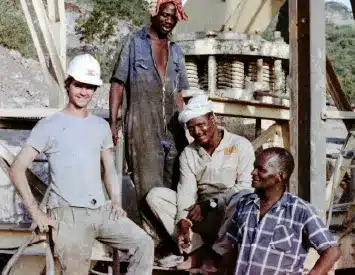
This experience eventually gave Charles the opportunity to move beyond solving individual technical problems and consider how engineering decisions affected the wider operation. As he took on more responsibility, it allowed him to connect the technical and operational sides of engineering more closely.
A Broader Operational View
For Charles, an engineering professional’s responsibility does not end when a machine is built or installed. It also means maintaining and improving its performance to make it more effective, so it can continue to serve its users and the business. “We are more effective engineers when we work closely with our internal and external customers to better meet their needs.” For Charles, this means looking beyond whether a solution works technically and considering its wider value to the business. He believes engineering professionals need to understand the costs of operation, what downtime could mean for the business, and what return an investment idea could deliver.
Seeing Through Technological Change
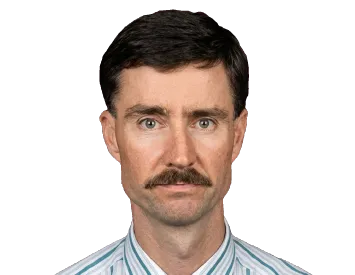
Over his five decades in engineering, Charles has seen significant changes in the technologies he works with, from limited analogue metering and manual records to increasingly sophisticated process controls, as well as the shift from slide rules and calculators to personal computers and software. Now, as AI becomes increasingly relevant, Charles is continuing to learn how this technology could shape the profession. He sees clear potential in AI and robotics, particularly in processes where inputs are consistent and production volumes are high. At the same time, his experience has shown him that applying emerging technologies in real industrial environments still needs engineering professionals to develop the processes to full effectiveness.
A Vision for ECT
Throughout his career, Charles also placed value on helping the younger generation of engineering professionals to take on new roles and challenges. As a member of the ECT Board of Governors, he sees value in an online learning model that allows students to continue developing without leaving the workplace. With pathways ranging from Professional Certificates of Competency to Bachelor’s and Master’s degrees, ECT provides opportunities for learners to build their skills at different stages of their careers.
His experience in engineering industry gives him a practical perspective on the opportunities and challenges engineering professionals face as they progress through their careers. Reflecting on his role at ECT, Charles says, “If I can contribute some of my experience in the role of a Governor at ECT to open-up opportunities for engineers to develop their careers, then that will be very satisfying.”
For Charles, engineering is not only about keeping pace with change, but also about making sure the next generation is prepared to shape it.


