Professional growth often begins with a willingness to learn something new. For engineering professionals considering the next career move, remote study could be a starting point worth exploring.
This article features three ways remote engineering study can support career development and the ways the Engineering College of Technology (ECT’s) remote engineering courses can prepare students and professionals for future career opportunities.
Balancing Education with Commitments
Choosing to pursue further education helps learners build on existing experience and prepare for changing industry demands. However, balancing further study with other responsibilities and commitments brings practical challenges.
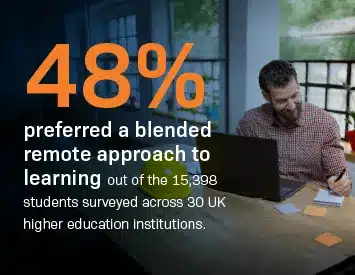
According to Jisc, a UK organisation supporting digital technology in higher education and research, 48% preferred a blended or a wholly remote approach to learning out of the 15,398 students surveyed across 30 UK higher education institutions on its findings on 2024/25 UK higher education students digital experience insights survey. This highlights the value of flexible learning options for students with different schedules and responsibilities by allowing them to access learning materials and organise study time around work, family, and other commitments. Remote learning also makes further education more accessible for pursing an engineering qualification in a way that better accommodates their individual circumstances.
How ECT Balances Education with Commitments
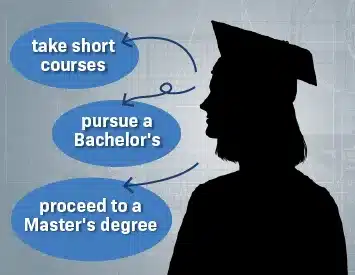
ECT offers a range of remote engineering courses, from short courses to bachelor’s and master’s degree programmes to give learners the flexibility to choose from different study options based on their current needs and future career goals.

Engineering professionals seeking to build a foundation in industrial instrumentation, Programmable Logic Controllers (PLCs) and process control may consider ECT’s Bachelor of Engineering (Honours) in Industrial Automation, while those looking to advance their expertise in Supervisory Control and Data Acquisition (SCADA) systems, advanced process control, and machine learning for industrial automation can explore ECT’s Master of Science in Industrial Automation and Instrumentation Control.
Accessing Education without Relocating
Not every learner has access to a local institution that offers the engineering specialisation they want to pursue. In some areas, the available programmes may not match the technical skills or qualifications needed for their desired career path.
Remote education widens these options by connecting learners with engineering institutions beyond their immediate area. Rather than limiting their choices to nearby campuses, learners can consider engineering programmes offered by institutions in other cities or countries, giving them access to a broader range of specialised study options.
How ECT Expands Access to Engineering Education
ECT provides learners with the opportunity to study engineering through a UK-based institution without having to move to the UK.
This can be valuable for students who want to gain an internationally recognised qualification while remaining in their home country. ECT also combines remote engineering education with practical learning opportunities, allowing students to engage with lecturers, collaborate with peers globally, and apply technical concepts through remote laboratories and simulation software. Live interactive tutorials provide opportunities to discuss engineering concepts with industry-experienced lecturers, while remote labs allow students to conduct experiments using real equipment through an online platform.
For example, learners who want to design electrical systems, analyse power networks, or work on renewable energy projects can consider ECT’s Bachelor of Engineering (Honours) in Electrical Engineering. Those who wish to specialise further in evaluating power system performance, analysing network stability and integrating renewable energy into electricity grids can pursue ECT’s Master of Science in Power System Analysis and Renewable Integration. Both programmes are delivered online, giving learners outside the UK access to these study pathways without the need to relocate.
Choosing a Qualification that Aligns with Ambitions
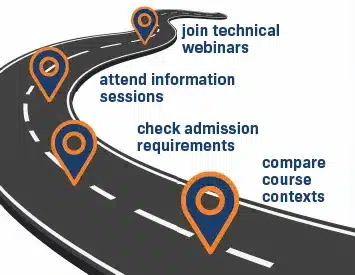
Comparing course contents, admission requirements and qualification levels, alongside attending technical webinars and engineering information sessions, help learners identify programmes that align with their specific career ambitions.
Webinars on emerging technologies and industry challenges help identify technical skills that learners want to develop, while reviewing entry requirements can determine whether learners meet the prerequisites. For example, an electrical engineering professional interested in renewable energy could attend a webinar on grid integration before comparing postgraduate programmes that cover power system analysis and renewable energy integration. This approach can connect their professional interests with the knowledge they need before choosing a realistic pathway for further study.
How ECT Supports Career Goals
ECT helps learners explore specific pathways towards their professional goals by examining the technical focus and learning outcomes of its programmes. For example, professionals interested in renewable energy can consider ECT’s Master of Science in Power System Analysis and Renewable Integration. Reviewing its course content and admission requirements can help prospective students determine whether they have the necessary background and whether the programme covers the areas they want to develop. This enables them to assess the relevance of a qualification before committing to further study.
Take the Next Step in Your Career
Remote engineering learning can turn professional curiosity into practical progress, giving learners the opportunity to deepen their understanding of engineering concepts and apply new perspectives to real-world challenges. ECT offers a way to make further learning part of a longer-term career plan for learners stay engaged with their field as technologies and industry expectations evolve.

References
2024/25 UK higher education students digital experience insights survey findings


