

27 October - 27 October, 2026

October 27 at 10:00 am - 11:00 am (United Kingdom Standard Time)
Event Start Time (United Kingdom):
Webinar details
High-frequency transformer modelling becomes increasingly important as power converters move into the multi-megahertz (MHz) range. At these frequencies, even parasitic capacitances measured in picofarads can significantly affect transformer behaviour, soft switching, efficiency and overall converter performance.As power converters move into the multi-megahertz (MHz) range, transformer behaviour becomes increasingly difficult to predict using traditional idealised models. Even parasitic capacitances measured in picofarads can have a significant impact on soft switching, efficiency and overall converter performance.
In this webinar, we’ll explore how intrawinding and interwinding capacitances influence high-frequency transformer behaviour and introduce a physics-based lumped transformer model validated up to 30 MHz across multiple transformer geometries. Using real-world validation at 6.78 MHz and 13.56 MHz, we’ll demonstrate how more accurate transformer modelling can support the design of efficient, high-power isolated and resonant converters.
- The webinar will be recorded and will be sent out to registered attendees afterwards.
- A certificate of attendance will be provided to attendees who request one near the end of the live webinar session.
- Please note: the time stated on this event is in UTC. You will need to convert this to your own time zone.
Key takeaways from this webinar:
- Why the ideal transformer assumption breaks down at multi-MHz frequencies.
- How picofarad-scale parasitic capacitances can affect soft switching and converter efficiency.
- How physics-based transformer modelling can more accurately predict high-frequency behaviour.
- What validation at 6.78 MHz and 13.56 MHz reveals about real-world transformer performance.
- Practical considerations for designing high-frequency, high-power isolated converters that reliably achieve soft switching.
- Date: Thursday 27th October 2026
- Time: 10:00 AM – 11:00 AM UTC
- Location: Online Session
Meet the Presenter
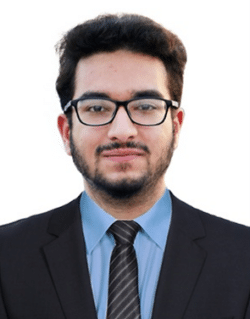
Muhammad Ehab, EIT Lecturer
Muhammad Ehab received the B.S degree from The University of Lahore, Lahore, Pakistan, in 2019 (with the highest distinction where he was also awarded with a Gold Medal for academic excellence) and the M.S degree from Soongsil University, Seoul, South Korea, in 2023, both in electrical engineering. He is currently working towards the PhD degree in electrical engineering from The University of Western Australia, Perth, Australia and is a lecturer at the Engineering Institute of Technology, Perth, Australia.
His research focuses on high frequency power electronics, modeling of magnetic devices and components, power converters, microgrids, and the analysis, design and development of advanced control strategies for grid connected inverters.
Reserve Your Place Today
Places are limited – don’t miss your chance find out more about ECT and ask questions about our courses.
Continue Your Engineering Learning
Enjoyed this webinar? Take the next step in your professional development with ECT. Whether you’re looking to gain a recognised qualification through our online BEng and MSc programmes or build specialist expertise with 3-month Professional Certificates of Competency, we offer flexible learning designed for working engineers and technical professionals.
Explore our Programmes or browse our Professional Certificate Courses to continue advancing your career.
About the Engineering College of Technology (ECT)
ECT is a UK-registered higher education provider affiliated with the Australian-based Engineering Institute of Technology (EIT). We offer industry-relevant engineering qualifications powered by interactive online platforms, remote labs, and expert instructors from around the world. Registered with the Office for Students (OfS) – UKPRN: 10089771 Member of the Quality Assurance Agency for Higher Education (QAA)
Stay in touch
Subscribe to our newsletter for all the latest updates.